Why a Handle Changes the Way a Tool Works
Why a handle changes the way a tool works: compare grip, reach, and control to choose a form that fits the task and the person using it.
The common mistake with a tool handle is treating it as a place to hold, rather than as part of the tool’s working geometry. That can turn a sound blade, brush, or lever into something tiring or hard to steer. Why a handle changes the way a tool works is simple: its shape and position direct the hand’s force, and the hand directs the tool.
Grip shape sets the kind of control
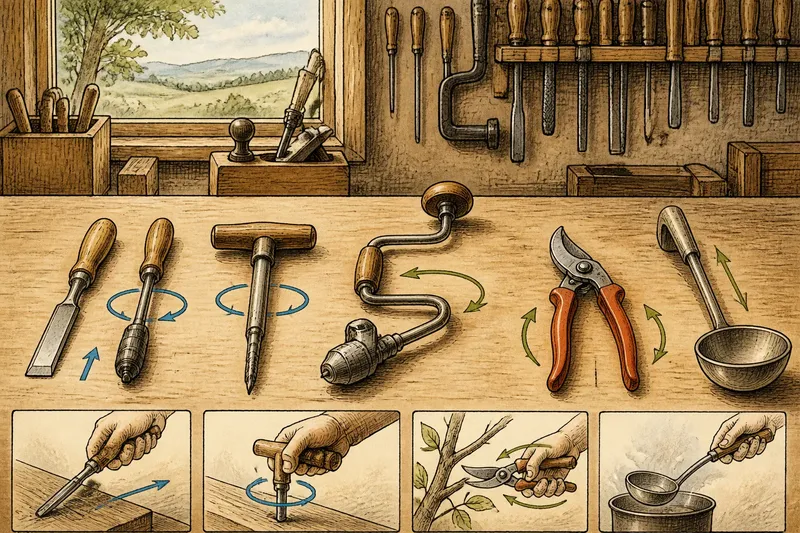
A slim, round handle lets the hand rotate around it readily. That suits a screwdriver, where the user may need to turn the shaft while keeping its tip aligned with a fastener. The same freedom can be a nuisance on a knife or rasp: if the handle rolls in the palm, the working edge may wander.
Faceted, oval, or asymmetrical handles resist that rolling. A carpenter’s chisel often has a rounded or gently shaped grip that can be aligned by touch, while a kitchen knife’s flatter sides help the user sense where the blade points. The handle does not need to lock the hand in place; it should make the useful orientation easy to find.
These shapes suit different kinds of movement. A round grip favors turning and repositioning. A flatter grip favors directional control. Deep finger grooves may feel reassuring in one hand but can prescribe a grip that does not fit another, so a modest contour is often more adaptable.
Handle position sets reach and leverage
A handle aligned with a tool’s working axis usually asks for a straight, direct push or pull. The handle of a file, for example, sits behind the working surface so the hand can guide it along a stroke. A crosswise handle, like the crossbar on a hand drill, gives the wrist a different angle and makes turning easier.
Offset handles change the relationship between hand and working end. On pruning shears, the handles open and close around a pivot, translating a squeeze into a cutting action. On a ladle, the long handle places the hand away from a hot pot while the bowl reaches into it. Reach and leverage are not decorative additions; they determine how much of the motion comes from fingers, wrist, or arm.
Longer handles can help the hand reach farther or apply force with a larger movement, but they also give the tool more room to swing. Short handles keep the working end close and are often easier to place precisely in a confined area. Choose the length by considering the path the tool must travel, not by assuming that more reach is always useful.
Handle materials affect feel and feedback
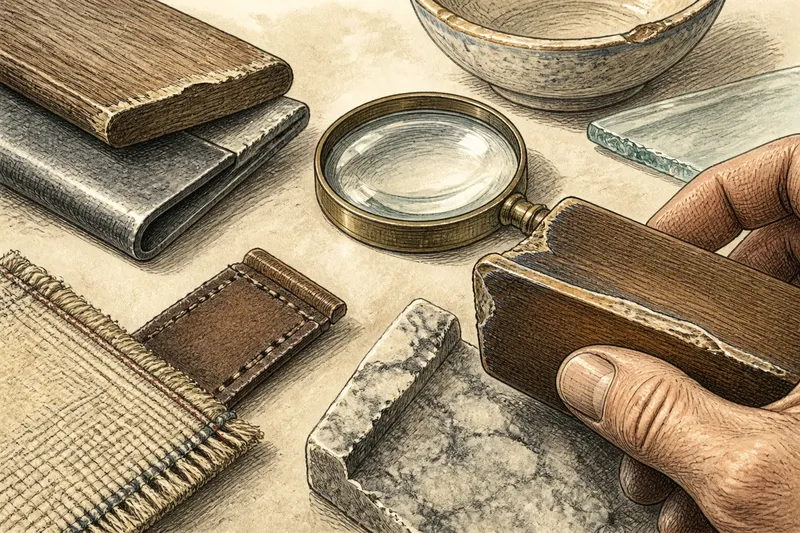
Wood, metal, molded plastic, and rubber each shape the contact between hand and tool. Wood can feel warm and offer a little surface texture; smooth metal can be easy to wipe clean but may feel slippery with damp hands. Rubberized surfaces can improve friction, though a soft coating may obscure subtle changes in pressure or orientation.
That feedback matters for delicate work. A brush handle that is too thick or heavily cushioned can make small changes in pressure harder to notice. A hammer handle needs a secure, comfortable hold as the head moves, but the user still needs to sense where the head is during the swing. The right feel depends on whether the task rewards sensitivity, a firm hold, or both.
Surface texture should also suit the setting. A kitchen tool may need a handle that can be cleaned easily, while a garden tool may benefit from a less slippery finish. Where the answer depends on product labeling, manufacturer instructions, or local rules, follow those rather than treating general handling advice as a specification.
Three handle approaches suit different tasks
A straight inline handle keeps hand and working end close to one axis. It suits tasks that rely on a direct stroke or a clear line of aim, such as filing or scraping. It may be less comfortable when the wrist must stay bent to reach the work.
A crosswise or T-shaped handle gives the user a way to turn or push with the palm and fingers around a bar. It suits twisting tasks such as operating a hand drill or turning a tap. It can feel cumbersome where the tool needs to pass through a narrow opening.
An offset or looped handle provides clearance for the fingers, changes the direction of force, or lets the hand stay farther from the working end. It suits shears, tongs, and other tools whose action depends on squeezing or opening. It can be less intuitive if the user expects a simple straight push.
Say you need a small tool for turning screws inside a crowded cabinet. An inline screwdriver gives a direct path, but its handle may be difficult to rotate where there is little room for the wrist. A T-handle could provide a better turning grip, yet its crossbar may not fit between the cabinet sides. In that invented situation, a compact offset driver is the likely choice if its head can reach the screw squarely; the observable result would be a turn made without the handle striking the surrounding panels.
Which handle works for the task?
Should a handle be round or shaped?
Choose round when the hand needs to rotate freely, as with a turning tool. Choose a flattened or faceted grip when keeping the working edge oriented matters more than spinning the handle in the palm.
Does a longer handle give more control?
Not by itself. A longer handle can extend reach and allow a broader movement, but a short one may give better placement in a tight space; match the length to the working path.
What should a handle feel like in the hand?
It should allow a secure hold without forcing the fingers into an uncomfortable position. If possible, hold the tool as it would be used and notice whether the wrist stays near a natural angle and the working end points where intended.
Can a handle be replaced with a different style?
Only if the tool is designed to accept that change and the replacement is compatible. A different grip can alter balance, reach, and force, so a handle that fits the hand may still make the tool harder to control.
Choose by tracing the hand’s movement
Before choosing between handles, mime the task with an empty hand: turn, push, pull, squeeze, or guide. Notice where the wrist wants to sit, how far the hand must travel, and whether the tool needs to stay aligned with an edge or fastener. Then compare handles by the motion they make easy, rather than by appearance alone.
A useful handle is a little like a door knob: its form quietly suggests whether to turn, push, or pull. With tools, that suggestion becomes leverage and direction. Why a handle changes the way a tool works is therefore not a matter of comfort alone; the right shape lets the intended movement happen with less adjustment from the hand.