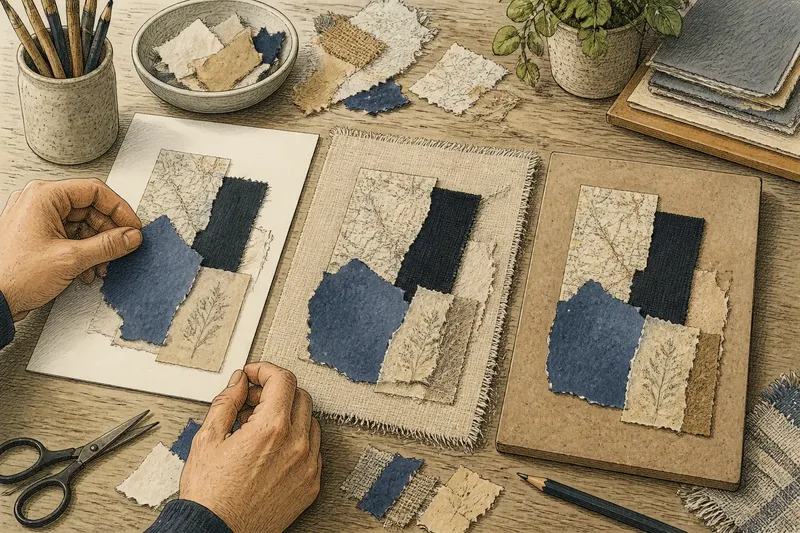
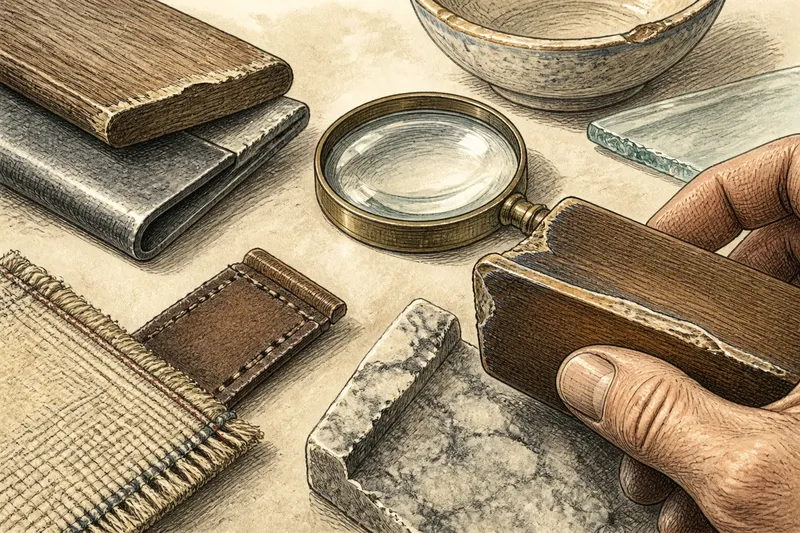
The Handmade Look Is Not the Same as Handmade
The handmade look can shape a room, but it cannot verify how an object was made. Learn to assess style separately from production claims.
The most common mistake when choosing a handmade-looking object is paying for a production story that its appearance cannot confirm. A wavy rim or visible seam may suit your room, but treating those details as proof can leave you with a style you wanted and a process you did not actually verify. Appearance and manufacture are separate matters.
That distinction is useful because the handmade look has become a design language of its own. It can suggest warmth, informality, or a connection to craft whether an object was shaped by a person, a machine, or both. The practical question is which of those qualities matters to your decision.
The handmade look is a design choice
Designers can reproduce visual irregularity through molds, surface treatments, printed patterns, and deliberate finishing. Conversely, a skilled maker can use templates and tools to create a clean, highly regular form. The appearance may be expressive, but it does not provide a reliable account of production.
This matters most when comparing what you want with what a label claims. If you are choosing an object for its visual effect, assess its form, color, texture, and suitability for use. If the maker or process matters, ask for information that addresses those things directly.
A useful analogy is a distressed wooden tabletop: the marks can give it the look of long use, but the look alone does not tell you whether the surface aged naturally or was finished that way. Objects are not quite as simple as tabletops, but the distinction between effect and history still applies.
Separate style preferences from production claims
Before judging an object, decide what you need to know. Aesthetic preference, practical use, and production history call for different information. Keeping them apart prevents a pleasing surface from doing more work than it can.
- What to check: The object’s shape, color, and texture in the setting where you plan to use it. If those qualities suit the setting, then judge it as a design choice; if not, consider a different form or finish.
- What to check: Whether the surface can be cleaned and handled as your use requires. If its finish fits the intended use, then keep it in consideration; if not, choose a more suitable material or finish.
- What to check: The exact wording of a handmade claim. If it names stages such as shaping or assembly, then ask for details about those stages; if not, treat the claim as too broad to answer your process question.
- What to check: Whether the maker, workshop, or production location is identified. If the information is specific, then use it as context for further questions; if not, leave the origin unconfirmed rather than infer it from style.
- What to check: Whether you are comparing like with like, including material, size, intended use, and finish. If those factors are comparable, then weigh the differences that matter to you; if not, narrow the comparison or consider each object on its own terms.
- What to check: Which details are visible and which explanations are assumptions. If you can describe a feature directly, then record it plainly; if not, mark the cause as unknown and seek process information.
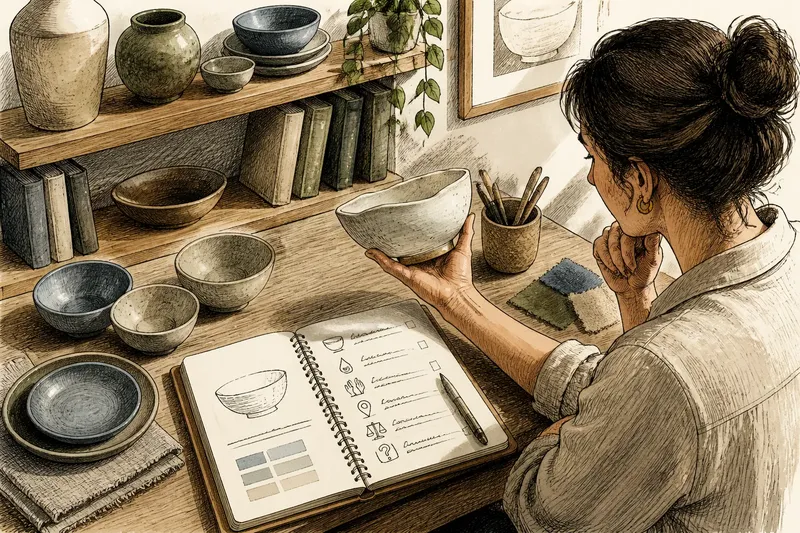
Imagine you are choosing a hypothetical ceramic bowl for an open shelf. Your starting point is that you want a muted glaze and a shape that sits comfortably beside your existing dishes; one bowl has a wavy rim, and its seller calls it handmade without describing the process. First, compare its color and silhouette with the shelf and your dishes. Next, ask which parts were shaped, glazed, or finished by hand; if the seller names the stages, you can assess that account, but if the answer stays broad, the production method remains unresolved. The resulting choice is clear either way: buy it for the look if that is enough, or keep looking if verified handwork is part of the brief.
Choose an object for the setting and the task
The same irregular finish can feel lively in one setting and distracting in another. Consider the object alongside nearby materials and forms, then consider how it will be handled. A textured vessel on a crowded kitchen counter has a different job from one placed on a quiet display shelf.
For functional objects, practical qualities deserve their own assessment. With a bowl, look at its stability, surface, and care instructions rather than treating a rough edge as evidence of craft. With a textile, consider how it drapes and whether its construction suits the intended use. Those observations help you decide whether the object works for you, regardless of its production history.
For an interior, a handmade-looking finish can be one element in a larger composition. Pairing a strongly irregular object with quieter forms may make its texture easier to appreciate; repeating that texture throughout a room can make it feel less like an accent and more like a theme. Neither choice is inherently better. The useful question is whether the effect feels deliberate in your space.
Ask what “handmade” means in this case
The word can cover different amounts and kinds of manual work. A person may shape a component while machinery handles another stage, or a maker may assemble and finish parts made by a production process. Ask which stages were done by hand and which involved tools or machines.
Specific process language is more useful than broad adjectives such as “authentic” or “artisan.” A description that names a material, technique, workshop, or production location gives you something concrete to clarify. If the maker cannot or does not provide those details, the honest conclusion is that the process is unclear.
Keep the claim and the object’s appeal separate. A piece can suit your home without a verified making story; a well-documented process does not automatically make an object the right design choice. The label should answer the question you asked, not supply a reason to like the object.
Questions buyers ask about the handmade look?
Can an irregular finish prove an object is handmade?
No. An irregular finish can be designed, produced with tools, caused by material variation, or shaped by wear. It describes an appearance, not a confirmed process.
Can a handmade object look perfectly regular?
Yes. Makers can use templates, molds, and other tools to create consistent forms. Regularity is a visual quality, not a verdict on who made the object.
What should I ask a seller about a handmade claim?
Ask which production stages were done by hand and which used tools or machinery. A clear answer about shaping, assembly, decoration, or finishing is more useful than a general label.
How can I describe the style without claiming a process?
Use terms such as “wavy rim,” “varied glaze,” or “handmade-looking finish.” These name visible qualities without presenting an unverified production history as fact.
Keep the design judgment and the history distinct
A handmade look can be a considered design effect, a personal preference, or a way to make a space feel less uniform. You do not have to establish how an object was made before deciding whether that effect works for you. But if the process matters, appearance is not a substitute for an account of the process.
When evaluating the handmade look, state your reason in the terms that fit: “the glaze works with the room” is a design judgment, while “the maker shaped the bowl by hand” is a production claim that needs support. Keeping those statements separate lets you appreciate the object without asking its finish to serve as a biography.